

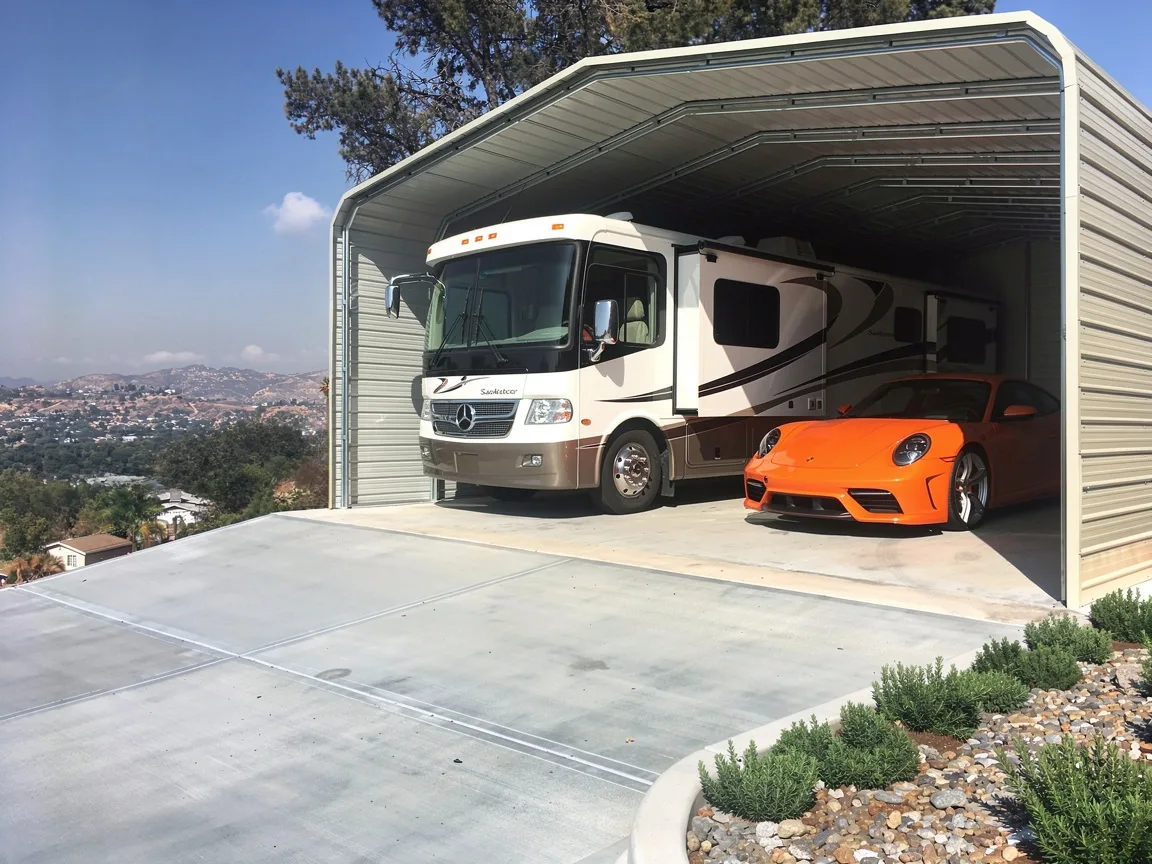
Your RV loses value every single day it sits uncovered in the Southwest sun. UV kills the paint and decals, heat cooks the roof seals, and one good monsoon hailstorm can do thousands in damage. The question isn’t whether to cover it, it’s how.
Most owners narrow it down to two options: a fabric cover or a steel RV cover. Here’s an honest comparison from a company that installs the steel kind – including when fabric actually makes sense.
A steel RV cover is a permanent open-sided structure that protects your RV from sun, hail, and debris without touching the paint. A fabric cover is cheaper upfront but wears out in 2–4 years, traps moisture, and can scratch your finish every time you pull it on and off. If you park your RV at home and plan to keep it more than a few years, steel wins the math.
Steel RV Cover vs. Fabric Cover: Side by Side
| Factor | Steel RV Cover | Fabric Cover |
|---|---|---|
| Lifespan | 20+ years | 2–4 years, then replace |
| Paint contact | None – never touches the RV | Rubs finish in wind; scratches over time |
| Moisture | Open airflow, no trapping | Traps condensation; mold risk |
| Hail protection | Yes – steel roof | Minimal |
| Effort | Drive in, done | 30+ min wrestling per use |
| Upfront cost | Higher (one-time) | Low (recurring) |
Add up what you’d spend on 3 replacement fabric covers over 10 years, plus one paint correction from cover rub. For most Class A and fifth-wheel owners, that total approaches the cost of a permanent steel cover that will still be standing in 20 years.
When a Fabric Cover Actually Makes Sense
- You store the RV off-site where you can’t build.
- You’re renting your home or moving soon.
- Your RV is older and resale value isn’t a concern.
In every other case – especially if your RV parks next to your house in the California or Arizona sun – a permanent structure protects better and costs less over its life.
Steel RV Cover Styles
Every Steel Strux RV cover is measured to your exact rig and property. The main choices:
- Standard open cover – roof and legs, maximum airflow, best value.
- Partially enclosed – side panels block low-angle sun and windblown rain.
- Extended height – for Class A motorhomes with roof AC units and satellite domes.
- Fully enclosed – at that point you want an RV garage with a door.
Height is the most common ordering mistake. Measure to the top of your tallest roof accessory – AC unit, satellite, solar tilt – not the roofline, and add clearance. Our free on-site visit exists exactly to catch this.
Common Questions
Will a steel RV cover protect against hail?
Yes. The steel roof takes the hit instead of your RV’s roof, skylights, and AC shrouds – the most expensive hail casualties on any rig.
Do I need a permit for an RV cover?
Usually yes above a size threshold, and rules vary by county and HOA. We handle engineered drawings for your county as part of the project.
Can it double as a carport or patio cover?
Absolutely – many customers size the cover for the RV plus a vehicle bay or shaded work area. Steel is custom-cut, so the footprint is up to you.
Protect your RV for the next 20 years
Free on-site measurement of your rig and property, engineered for desert sun and monsoon wind.
Schedule Your Free On-Site Visit →Serving Southern California & Western Arizona · (888) 820-4992