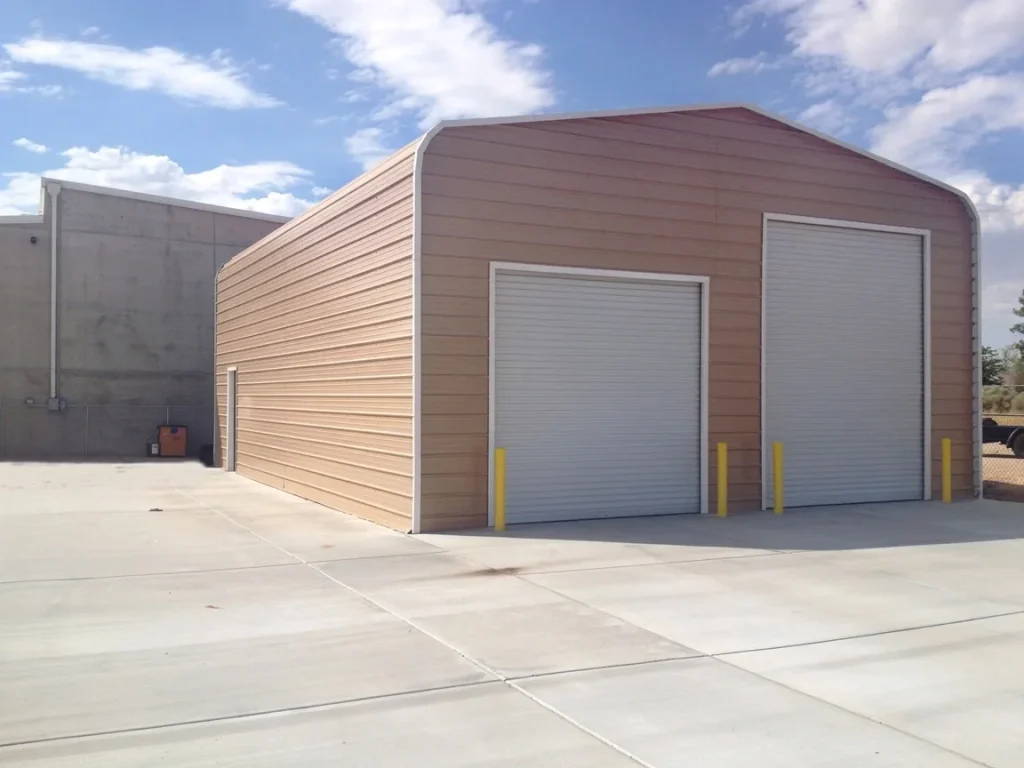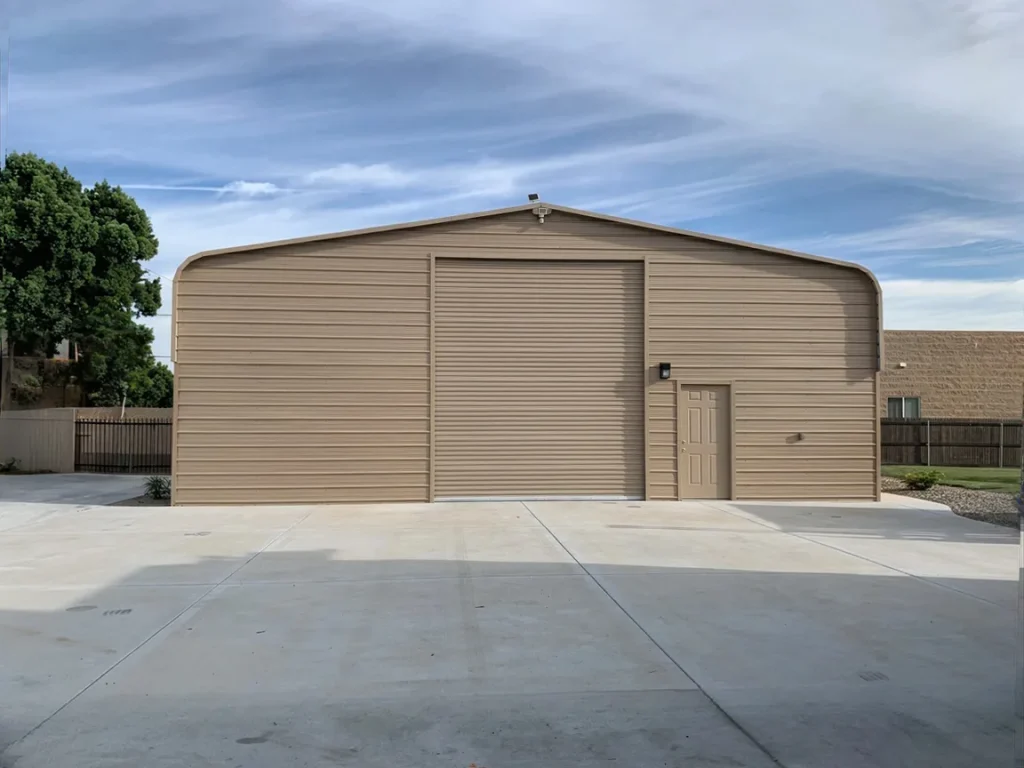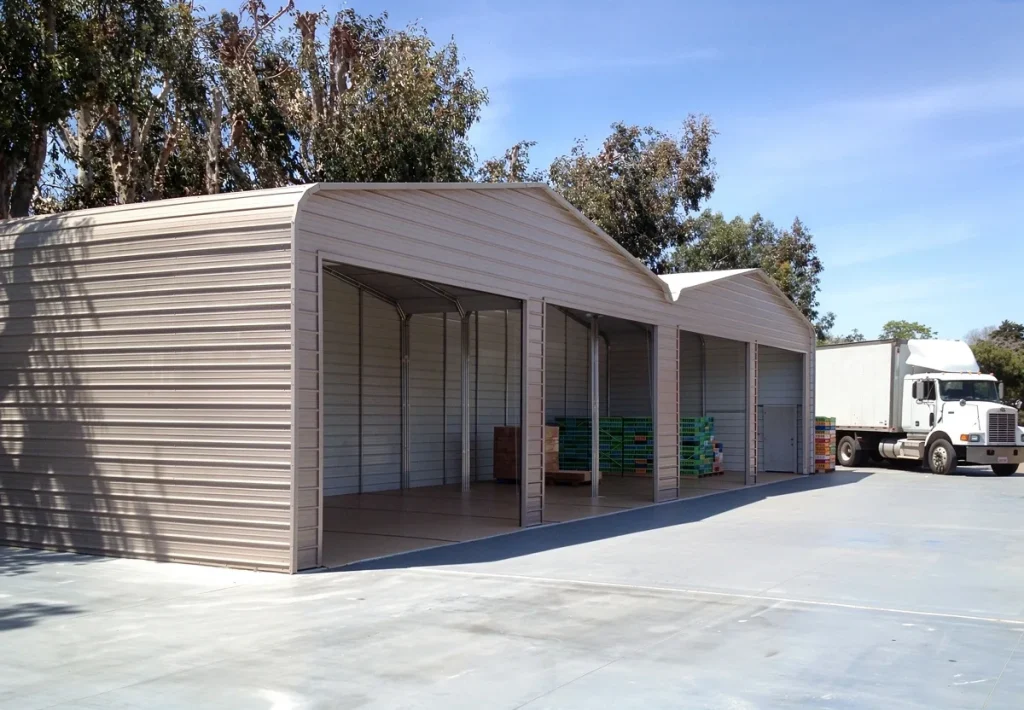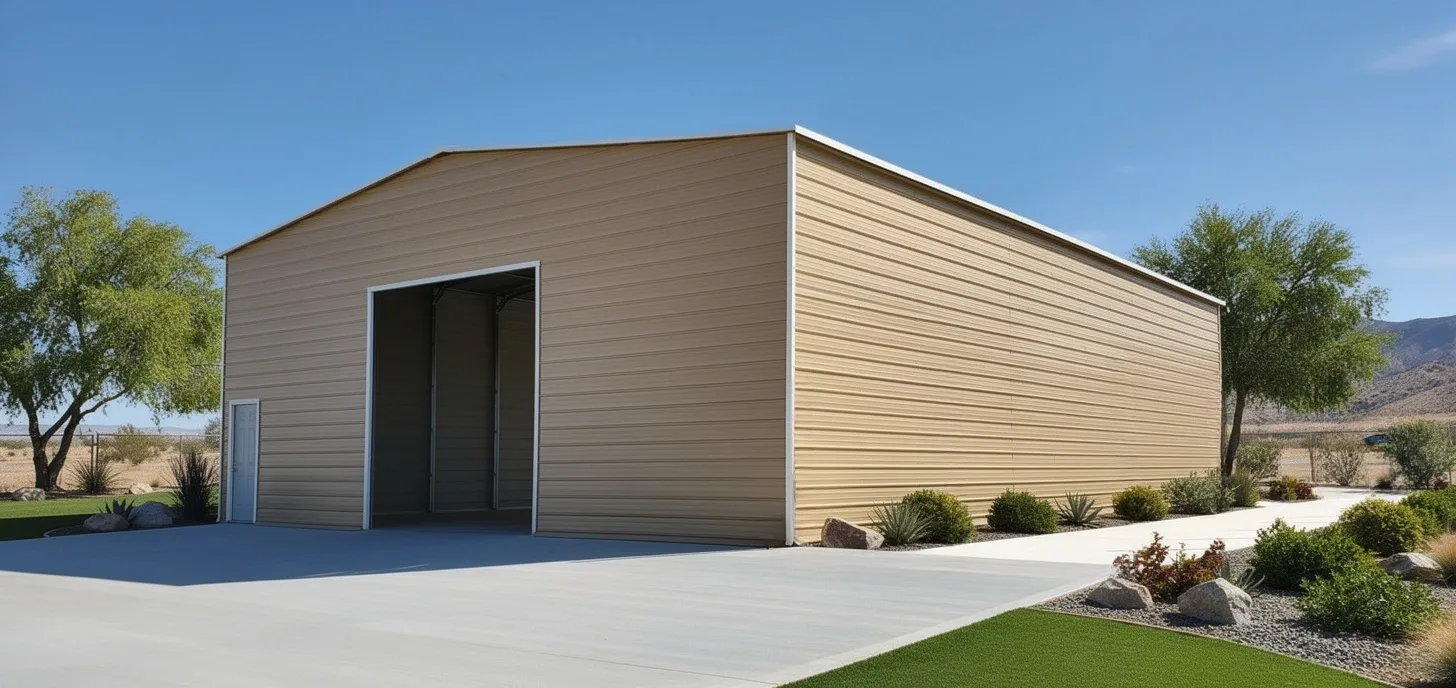
A bare steel building in the desert Southwest can hit 130°F inside on a summer afternoon. The same building, properly insulated and ventilated, stays comfortable enough to work in all day. The difference is a few smart decisions made before the panels go up.
Here’s how to insulate a steel building the right way – and which options are worth the money in the California and Arizona climate.
To insulate a steel building in a hot climate, combine three things: a light-colored cool roof, ridge or gable ventilation, and reflective or fiberglass insulation under the roof panels. Radiant barriers alone cut interior temps dramatically; full insulation matters most if you’ll cool or heat the space.
Why Steel Buildings Need a Different Approach
Steel conducts heat far faster than wood. That’s a weakness if you ignore it and an advantage if you plan for it: the same conductivity that heats a bare building means a reflective barrier and airflow shed that heat just as fast. In dry Southwest air, you also rarely fight the humidity problems that complicate insulation elsewhere.
Your Insulation Options, Ranked for the Southwest
| Option | Best For | Notes |
|---|---|---|
| Radiant barrier / reflective foil | Garages, RV storage, workshops | Biggest comfort gain per dollar in hot climates |
| Fiberglass blanket (vinyl-faced) | Workshops you heat or cool | R-10 to R-19 typical; installed with the panels |
| Spray foam | Conditioned spaces, offices | Highest R-value and air seal; highest cost |
| Rigid board | Retrofits | Good for insulating an existing building later |
Decide on insulation before manufacturing. Blanket insulation installs fastest and cheapest while the building goes up – retrofitting the same material later costs significantly more in labor.
Don’t Skip the Cool Roof
Panel color is free insulation. A light or white “cool roof” finish reflects a large share of solar energy before it ever enters the building. Pair it with ridge vents and the stack effect pulls hot air out continuously with zero energy use. Every Steel Strux building can be specced with cool roofing and ventilation from day one.
Ventilation: The Other Half of the Equation
- Ridge vents – passive exhaust along the roof peak.
- Gable vents or louvers – cross-breeze at the ends.
- Wall openings and roll-up doors – position for prevailing wind.
- Exhaust fans – for workshops with equipment heat.
Skipping a vapor-faced insulation in favor of bare fiberglass invites condensation drips on cold desert nights – the temperature swing condenses moisture on the underside of the roof. Faced blanket insulation or a radiant barrier solves it.
Insulating a Steel Building: FAQ
What R-value do I need for a garage or workshop?
For unconditioned garages, a radiant barrier is often enough. If you’ll run AC or heat, R-13 to R-19 walls and R-19+ roof is the common sweet spot in this climate.
Can I insulate an existing steel building?
Yes – rigid board and spray foam retrofit well. It just costs more than doing it during construction.
Does insulation help in winter too?
Yes. High-desert nights in places like Yucca Valley and Kingman drop below freezing – the same insulation that blocks summer heat holds winter warmth.
Planning a comfortable steel building?
We spec insulation, cool roofing, and ventilation for your exact use – during your free on-site design visit.
Schedule Your Free On-Site Visit →Serving Southern California & Western Arizona · (888) 820-4992